Beyond heartstrings: The science of social media strategy

In an age where movements are built, challenged, and sometimes dismantled online, social media has become one of the most powerful – and complex – tools available to activists. Navigating this terrain requires more than instinct or passion; it demands strategy, adaptability, and an understanding of how digital systems shape public attention. Few people understand this landscape better than Amanda Alampi, Director of Audience Engagement at Human Rights Watch, who led one of our recent capacity-building sessions with civic leaders across Europe.
With years of experience in digital advocacy – including previous work with Amnesty International and other global organizations – Alampi has helped design and steer campaigns in some of the most complex political and media environments. Her work offers a grounded, practice-based perspective on how movements can use social media not just to amplify messages, but to build power, shift norms, and sustain engagement over time.
Today’s social media platforms come with serious constraints. Activists must operate within corporate algorithms, contend with government surveillance, and cut through an environment saturated with misinformation. In response, Alampi argues, effective campaigns must be flexible, nimble, and responsive in new ways that go far beyond traditional communications planning.
“You can either join this rocket ship and really take advantage of virality and reach new and large audiences every single day, or you could be scared or stunted by the speed and scale”

Virality, momentum, and the myth of “slacktivism”
Despite these very real constraints of today’s digital environment, Alampi remains clear-eyed – but optimistic – about social media’s potential to drive change. "You can either join this rocket ship and really take advantage of virality and reach new and large audiences every single day, or you could be scared or stunted by the speed and scale.”
Crucially, she reframes virality not as a single explosive moment, but as a series of small tipping points – moments when dissent shifts from the margins toward becoming a visible majority. These shifts rarely happen through one actor alone. Instead, they emerge through collaboration between two groups: activists, who drive narratives and connect different parts of a movement, and enthusiasts, who may not organize but help spread messages through likes, shares, and low-effort engagement. Together, they create the cascading effect that allows ideas to travel.
This perspective also challenges the common dismissal of so-called “slacktivism.” Alampi cautions against underestimating small online actions like liking a post or signing a petition. In many contexts even these minimal engagements can be meaningful acts of resistance. "Social media today is a dangerous act in many places around the world," she emphasized. "We shouldn't belittle slacktivism and understand that liking something or signing a petition is an important part of the ecosystem of activism on social media today." It’s often the first step to deeper involvement and engagement.
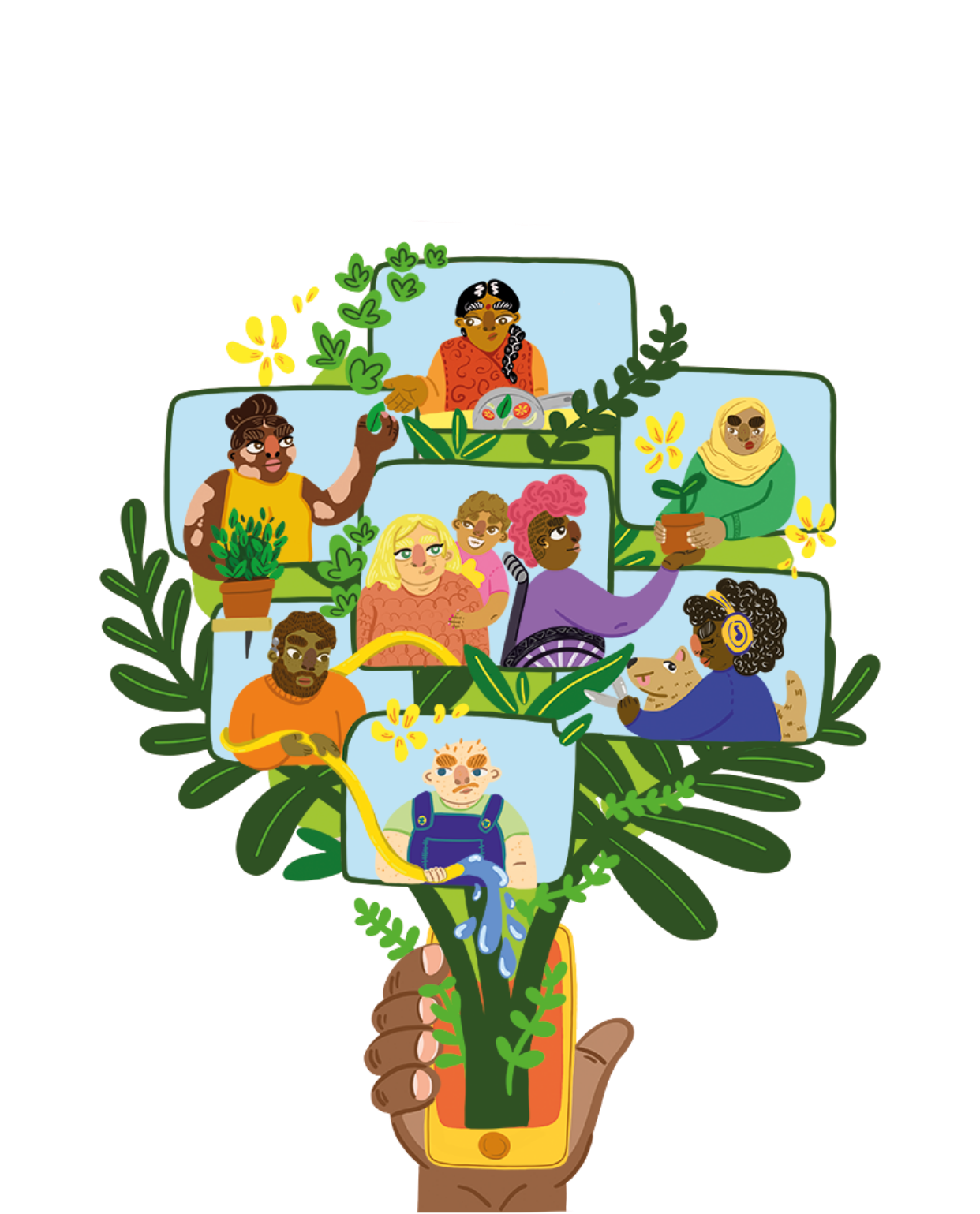
“Social media today is a dangerous act in many places around the world. We shouldn’t belittle slacktivism and understand that liking something or signing a petition is an important part of the ecosystem of activism on social media today.”
Strategic approaches to social media
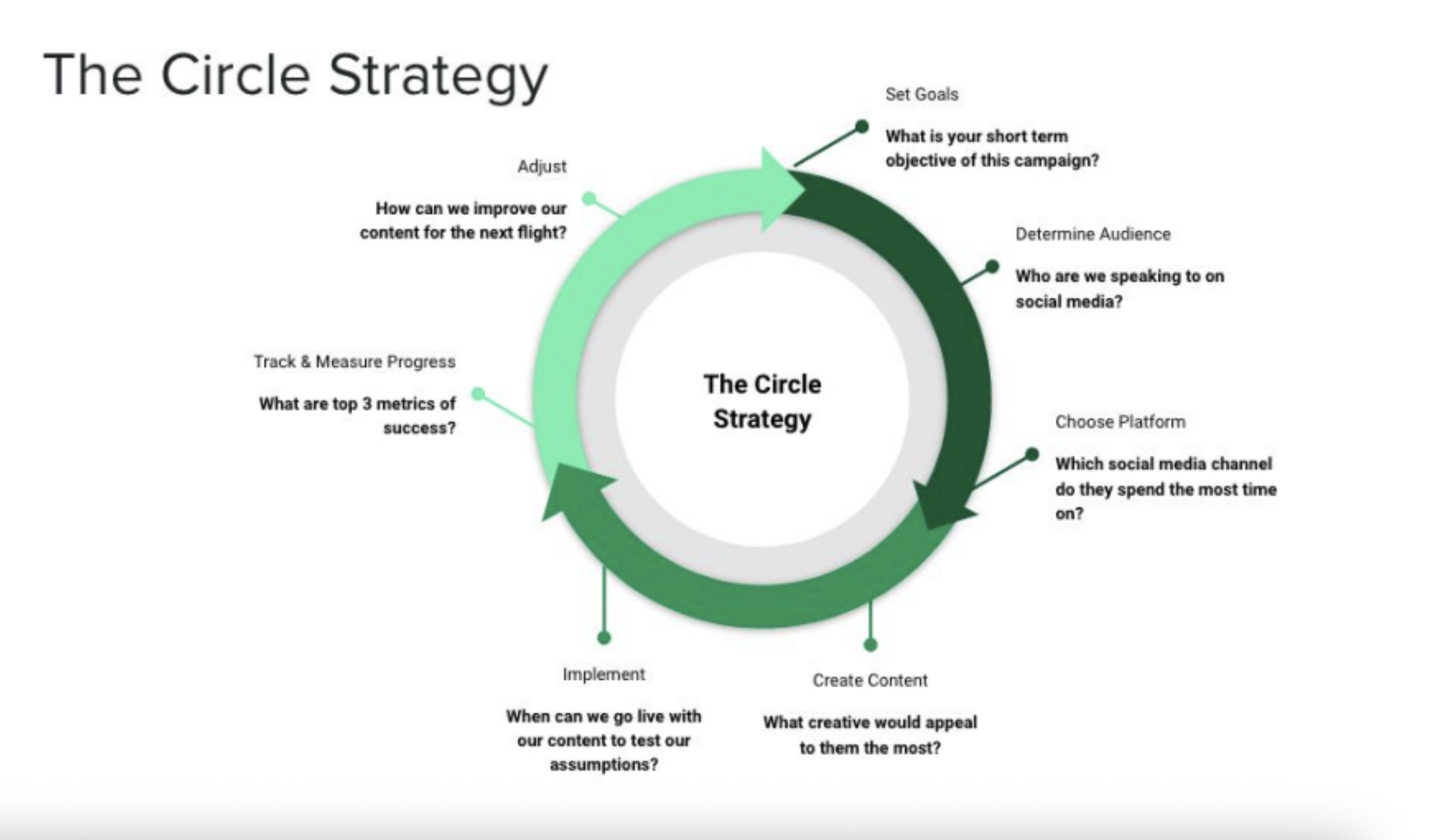
Alampi introduces two powerful frameworks for developing social media strategies. The Circle Strategy begins with setting clear goals and intentions, then moves through determining your audience, choosing your platform, creating content, implementing, tracking and measuring progress, and adjusting based on results. This approach particularly resonates with campaigners and strategists who think in linear terms.

The alternative Hamburger Strategy takes a more creative approach, starting with defining your audience (the “meat” of your strategy), selecting relevant content themes (the “cheese” that sticks), layering in voice and tone depending on your audience’s culture (the “sauce” that adds flavour), considering content formats (the “condiments” that add texture and variety), all that tailored to your respective platforms (the “bun” that holds everything together). This framework often appeals more to content creators and designers.
Tools for modern movement building
While discussing the practicalities of digital organizing, Alampi highlights the wealth of tools available to today's activists. For secure communication and grassroots organizing, messaging apps like WhatsApp and Signal have become essential tools. These platforms enable activists to coordinate securely and build community, much like how Facebook groups were instrumental during the Arab Spring. Reddit and even Pinterest have emerged as unexpected but effective platforms for movement building, as demonstrated by successful campaigns from the Movement for Black Lives Matter and the Women's March.
For creative work, Alampi points to accessible tools that have democratized content creation. Platforms like Canva and VSCO make it possible for activists to produce professional-looking content without significant resources. These tools have revolutionized how movements can present themselves visually, making it free and easy to create compelling campaign materials.
In some countries, specialized tools like Phone-to-Action have transformed how activists engage with decision-makers. These premium services can turn every Instagram post or TikTok video into a direct line to elected officials, allowing followers to auto-dial members of Parliament or Congress with a single click.
Often the most viral and useful content for reaching new audiences is educational information rather than direct advocacy asks.

Breaking out of bubbles
With the rise of messenger-based organizing, the growing importance of unpolished content, and the continuing challenge of misinformation, creating strategies for reaching beyond activist echo chambers are crucial.
Breaking the bubble, Alampi emphasizes, must be an intentional act. The key isn't just focusing on what you post on your own channels, but rather on what partners and influencers are posting. "Think of your work in concentric circles," Alampi advises. "Find people that you have something that aligns with them and then reach new audiences through creating larger and larger concentric circles."
A particularly powerful example of her work is partnering with Teen Vogue to share protest safety tips during the Women's March era. What started as a viral graphic about protest safety tips evolved into a year-long partnership that reached entirely new audiences. Alampi stresses that often the most viral and useful content for reaching new audiences is educational information rather than direct advocacy asks. "Hide your advocacy inside like a Trojan horse," she suggests, and find the connection point that would make different groups want the information.
While this approach requires more time, strategy, and careful packaging, Alampi argues that it's a much more effective use of resources than solely focusing on your own social media channels.
Ultimately, successful digital activism is less about chasing algorithms and more about building relationships, credibility, and communities that can carry ideas far beyond a single post. In a rapidly shifting digital landscape, strategy and creativity remain the most powerful tools activists have to turn attention into lasting change.
See The Commons’ library of resources on digital organizing or check out these books: Contagious: WhyThings Catch On (by Jonah Berger),
The Tipping Point (by Malcolm Gladwell),
Hit Makers (by Derek Thompson),
Blind Spot: Hidden Biases of Good People (by Mahzarin R. Banaji & Anthony G. Greenwald),
and Memes to Movements: How the World's Most Viral Media Is Changing Social Protest and Power (by An Xiao Mina).
〰️
〰️

About Amanda:
Amanda Alampi is a social media strategist specializing in digital advocacy to help advance human rights and social change. She currently serves Human Rights Watch as their Director of Audience Engagement. Amanda also worked for Amnesty International USA where she oversaw social media, creative, and brand for the US. Her award-winning digital advocacy and communications work has been featured in media outlets like the Guardian, CNN, TMZ, the Washington Post, Business Insider, Teen Vogue, and the New York Post. Amanda currently teaches at Fordham University and NYU’s Robert F. Wagner Graduate School of Public Service, helping to empower the next generation of digital activists. She has a BA and MPA both from NYU.